The winter in Mongolia does not welcome visitors—it tests them.
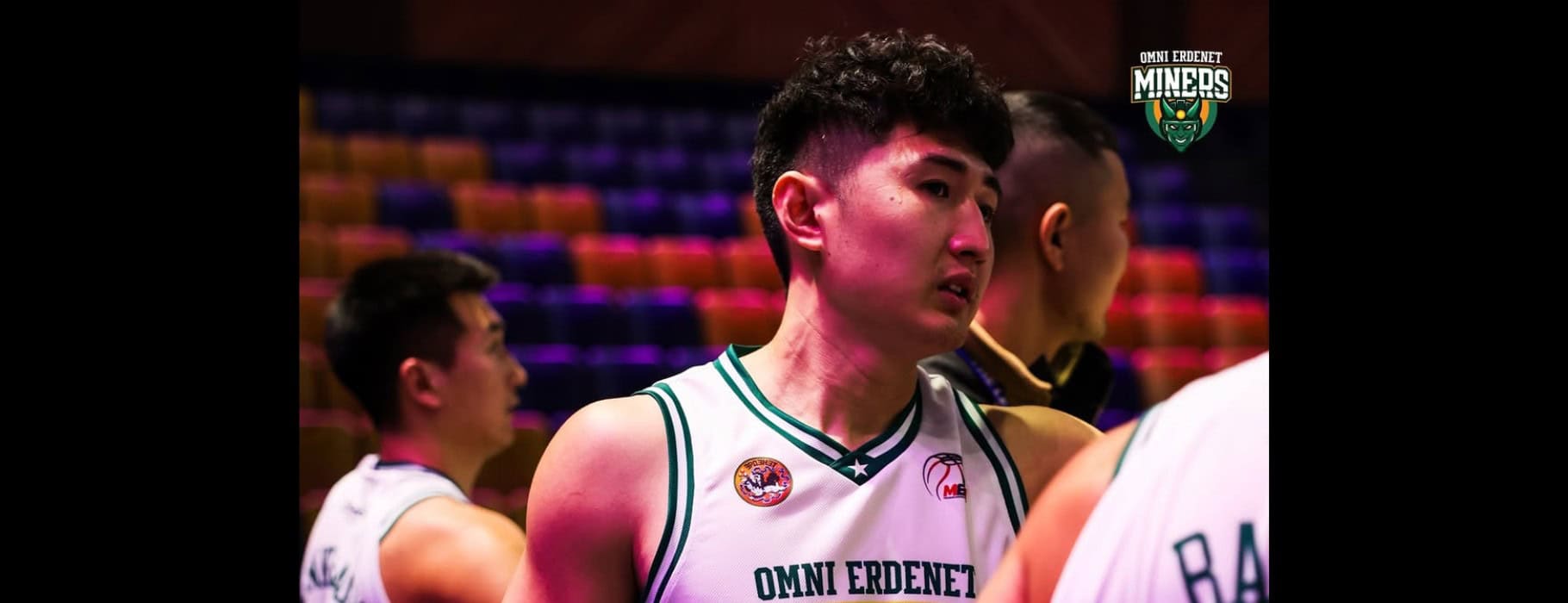
In Erdenet, the air cuts like thin glass, and every exhale turns into pale smoke drifting upward into the frozen sky. Yet in this unforgiving landscape, far from the humidity of Kuala Lumpur, Ting Chun Hong found something unexpected: possibility. As the first Malaysian to play in the Mongolian league as an Asian import, “Mei Mei” stepped into a world of deep cold and deeper uncertainty, chasing something bigger than comfort or career—visibility for a country few associate with basketball.
He has become a symbolic figure in Malaysian basketball, taking his career beyond home soil for a second straight year. This season, he made history as the first Malaysian player to join the Mongolian professional league. But the path to this milestone was anything but straightforward.
When the offer from the Erdenet Miners arrived, Mei Mei felt excitement, yes—but also hesitation. “Honestly, when I first received the offer, I hesitated a bit,” he said. “We were preparing for the SEA Games, but their league starts in October.”
Between national team commitments and planning his upcoming wedding, he found himself caught in a difficult balancing act. Yet the rare opportunity to be signed as an Asian import ultimately pushed him toward one decision:
He would take the leap.
Not for a résumé line. Not for adventure. But because of a belief he carries quietly but firmly: he wants the world to notice Malaysian basketball.
From Tropical Heat to Subzero Ice: Learning to Survive
Joining the Miners meant stepping far outside the comfort of familiarity. Mei Mei knew he would face a series of challenges: the weather, the culture, and the harsh reality that imports must survive.
“Mongolia is definitely much colder than Malaysia. We’re used to 30-plus degrees, and over here it’s minus ten or worse,” he said casually. But surviving, training, and competing in such cold temperatures is no small challenge for any Southeast Asian player.
Surprisingly, the style of play was less foreign.
“The way they play is actually quite similar to us, but more tactical. Once the ball crosses half court, they go straight into set plays. Every team has its own system. Some of these I’ve run before, so it wasn’t too hard to pick up.”
At Erdenet, the coaching staff assigned him a classic 3&D role—three-point shooting and defense. It sounds simple, but for an Asian import, there’s pressure to adapt quickly and deliver on scoring responsibilities.
“The coach told me to just play my game—if I want to shoot, shoot; if I want to drive, just go for it. But I still need time to adjust. There are other imports here who take up a lot of the creation, and I need to fit into the system.”
From the Black Bears to the Miners: His Map Keeps Expanding
Last season, Mei Mei represented the Macau Black Bears in the East Asia Super League (EASL). That was his first taste of being an Asian import—a mixture of shock, learning, mistakes, and a hunger to improve.
“EASL was my first time as an Asian import, so I feel I can still do better. There are a lot of things I can improve on,” he said. Everything he felt he didn’t execute well enough in EASL became part of his blueprint for growth in Mongolia.
He knows exactly what he wants to upgrade.
“I think I can get better in ball-handling and calling set plays. And I need to make shots when I’m open. Imports need to score. Of course I defend too, but scoring opportunities—I need to take them.”
So far, he has played three games for the Miners, averaging 6.7 points. His performances have shown clear improvement, highlighted by a recent game of 10 points, three rebounds, and a block on four-of-seven shooting. Defensively, he was tasked with guarding the opponent’s import and main creators—helping the Miners beat last season’s runners-up, Bishrelt Metal, 78–70. The Miners now stand at 4–4, sitting sixth in the league.
Mei Mei is about to complete the current phase of his stint in Mongolia. He will then return home to continue preparing for next month’s SEA Games in Thailand. In January 2026, once he has finished both the SEA Games and the Agong’s Cup, he will set off again—back to Mongolia to rejoin the Miners for the next stretch of the season.
The Lone Warrior’s Vision: To Put Malaysia On The Map
Yet the true value of this overseas journey isn’t measured in points, rebounds, or box scores. It lies in Mei Mei’s long-held hope for Malaysian basketball.
He openly admits that his desire to play abroad stems from wanting to show that Malaysian players can compete, and that Malaysia—often overlooked—is worth paying attention to.
“Many people don’t even know where Malaysia is, let alone know that we have basketball,” he said firmly. “If one day I can perform well in an overseas league and someone asks me where I’m from, and I say Malaysia—maybe then they will start paying attention.”
He understands that staying in Malaysia, regardless of how well he performs, won’t be enough to move the sport forward.
“If you keep playing locally, people will say: so what if you’re good in Malaysia?”He said.
His ultimate goal is to create a ripple effect. If other Asian leagues start noticing Malaysian players, new opportunities will open. More Malaysian players will have the opportunity to play overseas. More players will gain exposure. The Malaysian league could expand—not just in team count, but in relevance.
“What I really want to see is Malaysian basketball getting better. I hope that someday we can reach that point. And I want to see how far I can go while I’m still able to play.”
This is the heart of his expedition—a lone pioneer carving a path through the cold, hoping others from his country will follow. His personal challenge becomes the spark for a larger basketball future.
In the frozen silence of a distant land, he stands on the frontier of Malaysian basketball, carrying both the weight and the hope of a nation.
A lone warrior, yes—but never alone in purpose.